

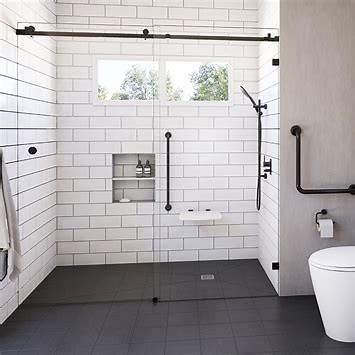
As families plan long-term comfort, creating a bathroom that is safe, convenient, and beautiful becomes essential. The goal: design for all stages of life without making the space feel institutional or clinical. With thoughtful design, your bathroom can serve current and future needs, especially in neighborhoods like Orleans, Rockland, and Barrhaven, while staying elegant.
Why Accessibility & Style Should Go Hand in Hand
- Aging in place means reducing risk (falls, slips) without surrendering beauty.
- A safe bathroom adds value not only for the current occupant but for resale appeal to buyers wanting longevity.
- Thoughtful design allows features (grab bars, curbless access) to blend in, so they feel like design elements, not afterthoughts.
Essential Accessible Features with Elegant Touches
Here’s how to combine functionality and aesthetic harmony:
1. Curbless / Roll-In Showers
- A no-threshold shower removes barriers for walkers or wheelchairs.
- Use a gentle slope to drain the space, and integrate linear drains that are discreet.
- Pair with frameless glass panels to maintain openness and elegance.
2. Strategically Placed Grab Bars & Safe Supports
- Use integrated grab bars that match other hardware finishes (matte black, brass, brushed nickel) so they feel cohesive, not clinical.
- Consider hidden supports behind tile walls (reinforced walls with blocking) so grab bars look sleek and flush.
- Place bars near toilet, in shower, and optionally by vanity, in accessible yet subtle positions.
3. Wider Doorways & Maneuvering Space
- Doors of 36″ (915 mm) or more are ideal for mobility devices, with zero or low thresholds.
- Leave clear turning radius in front of fixtures (e.g. a 5′ circle or at least 60″ (1525 mm) in diameter where possible).
- Use sliding pocket or barn doors to save swing space while preserving width.
4. Accessible Vanities & Sinks
- Roll-under sinks or floating vanities allow seating or wheelchair access.
- Use lever or touchless faucets that are easier to operate.
- Position lighted mirrors with tilt or adjustable height to suit all users.
5. “Comfort Height” Fixtures
- Toilets at 17–19″ seat height make transfers easier for many users.
- Consider bidet or washlet features for hygiene with minimal motion.
- Controls (flush buttons, faucet handles) should be reachable from seated positions.
6. Non-Slip Flooring & Lighting
- Choose tile or flooring with good traction and an appropriate slip rating, especially when wet.
- Use layered lighting: ambient, task, and accent—so shadows are minimized and safety is enhanced.
- Install motion or night lighting to prevent missteps in low light.
Styling Accessibility: Design That Feels Like Home
Here are design strategies to integrate accessibility elegantly:
- Match hardware finishes across grab bars, faucets, shower hardware, and towel racks to unify the look.
- Use accent tile or texture around fixtures (e.g. behind shower bar or grab bar zones) to make them feel built-in.
- Color harmony: keep the palette consistent, so accessibility features don’t feel jarring.
- Hidden supports: use recessed niches or inset panels so bars can mount flush.
- Soft curves: round corners on grab bars, bench edges, and vanities evoke a softer, more modern feel.
Implementation Tips & Considerations
- Reinforce walls during renovation so hidden grab bars can anchor securely.
- Ensure waterproofing is continuous behind panels or tiles, especially in curbless zones.
- Prioritize local codes and accessibility guidelines—these vary by region.
- If you’re on a budget, prioritize must-have features first (curbless shower, proper grab bar placement) and add finishes later.
Call to Action
Let us help you plan an accessible bathroom that still feels beautiful—contact us today.
We’ll assess your space, recommend where safety and style intersect, and help you choose finishes and layouts that feel elegant and enduring.