

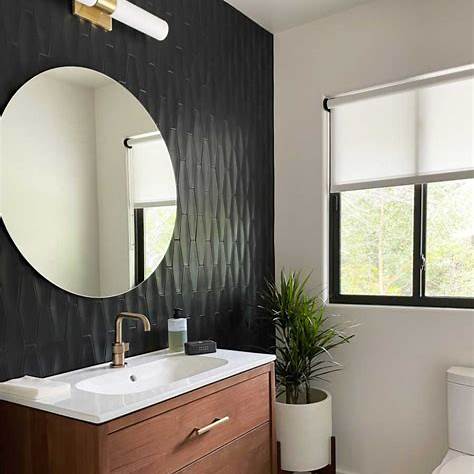
An accent wall in the bathroom can be a brilliant way to introduce personality and visual focus — but it’s easy to overdo it. The trick is choosing one wall and applying it thoughtfully so the space gains interest, not chaos. Below you’ll find principles, material ideas, and practical layout tips to help you frame a standout feature that sits in harmony with the rest of your bathroom.
Why Use an Accent Wall?
- Creates a visual anchor: It directs the eye and adds drama without needing bold color everywhere.
- Highlights architecture or fixtures: You can use it behind a vanity, bathtub, or in a shower enclave.
- Adds texture and depth: Introducing a contrasting material—stone, tile, wood—deepens character.
- Affordable statement: Because only one wall gets treated, material costs stay under control.
Choosing the Right Wall to Accent
Common and effective locations include:
- Behind the vanity or mirror — it’s often the natural focal wall since you face it regularly.
- Shower or tub back wall — especially in frameless glass showers, the accent becomes integrated.
- Opposite the entrance — gives an immediate impact when you walk in.
- Ceiling or partial wall — in tight spaces, accenting a horizontal band or ceiling edge can work beautifully.
Materials & Effects: What Works Best
Here are materials that create impact without overpowering:
| Material Type | How to Use It | Balance Tips |
|---|---|---|
| Decorative tile / patterned tile | Use a vertical strip or tile band rather than the whole wall. | Keep surrounding walls in a simpler neutral texture or solid tone. |
| Large-format slab or bookmatched stone | One dramatic slab behind vanity or tub becomes the star. | Use minimal grout lines and pair with matte or soft tones elsewhere. |
| Wood or wood-look planks / panels | Vertical wood strips or cladding can bring warmth and texture. | Use light tone or stabilized/plasticized wood to handle humidity. |
| Textured panels & 3D tiles | Use them in niche, half-wall, or insets for subtle depth instead of full walls. | Give them room to “breathe” — don’t mix too many textures on the same wall. |
| Gloss / glass / mirror tiles | Use them sparingly—maybe a narrow band or inset—because they reflect and catch light. | Place gloss in smaller areas where reflection adds dimension rather than glare. |
Do’s & Don’ts for Accent Wall Success
✅ Do:
- Start with a simpler base palette so the accent wall can shine.
- Limit contrast: choose materials within the same undertone family.
- Use accent materials in neighboring zones (e.g. niche, shelf surround) to echo the feature wall.
- Use lighting to enhance it—accent lighting, soft downlights, or LED backlights.
- Consider maintenance: glossy surfaces, glass, or textured tiles need careful cleaning.
❌ Don’t:
- Use strong patterns on all walls — it becomes visual overload.
- Choose an accent wall with heavy moisture exposure (unless material is fully water rated).
- Let the accent wall fight with other dominant elements (like bold cabinetry or loud flooring).
- Forget transition zones — the edges between accent and main walls should feel deliberate, not abrupt.
Local Palette Ideas for Ottawa Homes
Because of our changing light and climate, here are some ideas that tend to age well in Ottawa:
- Warm neutrals with a pop: e.g. a taupe base with a charcoal patterned tile accent.
- Natural stone veins: one slab of marble or quartz behind the vanity, paired with soft matte wall tone.
- Wood / timber-look accent: lighter oak-look cladding behind a mirror, with pale neutral walls.
- Subtle color shift: same color family but deeper tone on accent, e.g. soft sage walls + deeper green tile behind tub.
These combinations feel grounded in the local aesthetic but allow your accent to be the showpiece.
Example Layout Strategy
- Choose your wall — e.g., behind vanity or shower back.
- Decide the material scale — full wall, half wall, niche band, or floor-to-ceiling strip.
- Match or harmonize materials — e.g. tile, stone, wood, or panels that complement your main palette.
- Use accent lighting to frame or highlight your feature (e.g. downlighting, hidden LED strips).
- Blend into surroundings — incorporate accent material in small spots in other walls or cabinetry trim to tie it together.
Call to Action
Email us your layout and we’ll mock up accent wall ideas tailor-made for your bathroom.